For parents
Is a Birthday Party Too Much for Your Child?
We spend so much time thinking about how to make a child’s birthday special. Here’s the one detail we sometimes forget — and ten gentle ways to fix it.
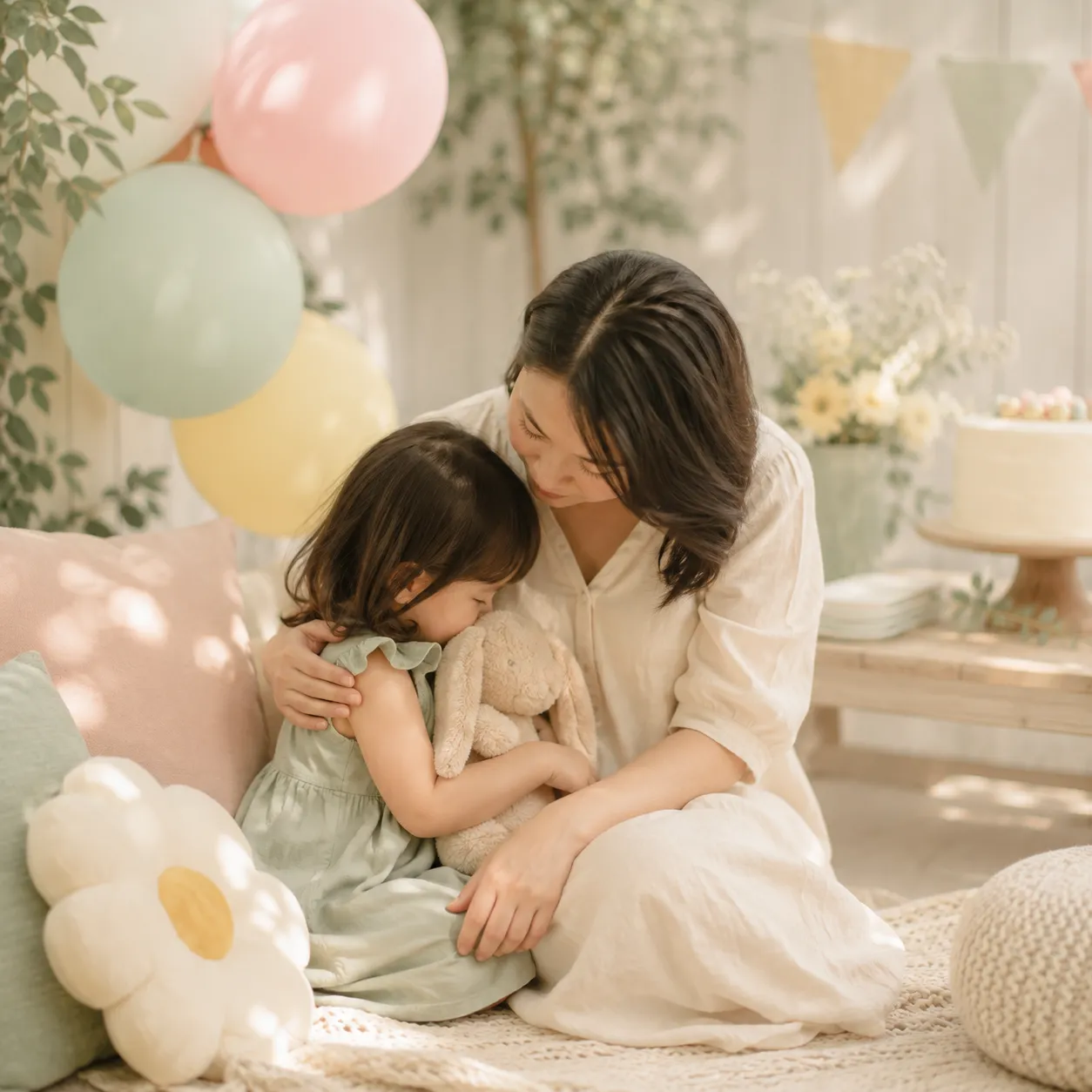
The balloons. The cake. The decorations. The friends. The music. The presents. The moment everyone gathers around and sings Happy Birthday.
But there’s one tiny detail we sometimes forget:
For a young child, all of that can be A LOT.
Even a child who has been talking about their birthday for weeks can suddenly become clingy, shy, angry, overwhelmed—or completely uninterested in the beautifully planned party happening around them.
And that’s actually pretty normal.
Young children are still learning how to handle big emotions, transitions and exciting new situations. Tiredness, overstimulation and changes in routine can all contribute to meltdowns, especially for toddlers and preschoolers.
So how can we make their birthday feel exciting without making it overwhelming?
Tell Them What’s Going to Happen
We love surprises.
Toddlers? Not always.
A little preparation can make a huge difference.
The day before—or even for a few days before—talk about what the party will look like:
“Grandma and Grandpa will come.”
“Your friends will come to our house.”
“There will be balloons.”
“We’ll eat pizza and cake.”
“Everyone might sing Happy Birthday.”
Simple explanations help make an unfamiliar event feel more predictable. Routines and warnings before transitions can make changes easier for young children.
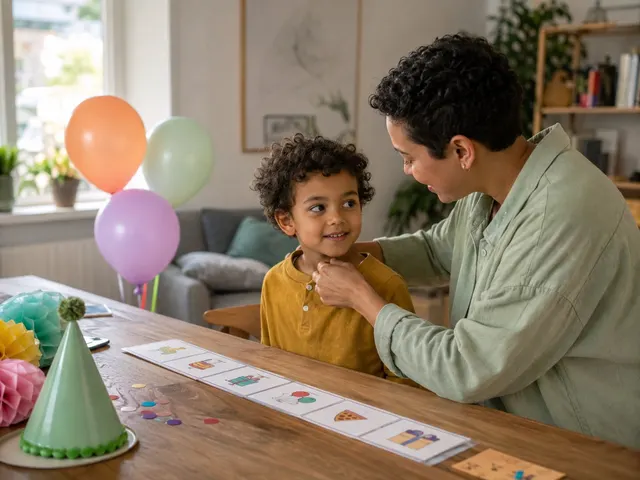
For slightly older kids, you can even walk them through the plan:
First we’ll play → then eat → then have cake → then everyone goes home.
Knowing what comes next can be surprisingly comforting.
Let Them Help Prepare
One of the easiest ways to prepare kids emotionally is to actually include them in the preparation.
Let them:
- choose between two party themes
- pick their favorite balloons
- help put napkins on the table
- choose the cake topper
- fill the goodie bags
- decide which stuffed animal gets to attend the party
They don’t need to plan the party.
They just need to feel like this is their party too.
And for toddlers, giving two simple choices is usually much easier than asking an enormous question like, “What kind of birthday do you want?”
Don’t Sacrifice the Nap for the Party
This may be the least glamorous birthday advice on the internet, but it might be the most useful:
Protect the nap.
A spectacular party scheduled exactly when your three-year-old normally sleeps can quickly become a spectacular meltdown.
When possible, plan the party around your child’s normal sleep and meal schedule. Predictable routines are especially valuable for young children, and tiredness can make emotional regulation significantly harder.
Sometimes the best party time isn’t the most convenient time for the adults.
That’s okay.
Bigger Isn’t Always Better
Twenty-five kids.
A magician.
A bounce house.
Music.
Bubble machines.
Face painting.
A giant cake.
A photographer.
Amazing?
Maybe.
But from a three-year-old’s perspective it might also feel like walking into a tiny version of Times Square.
You don’t have to eliminate all the excitement. Just remember that more entertainment doesn’t automatically mean more fun.
The American Academy of Pediatrics encourages approaching young children’s birthday parties primarily as an opportunity to play, with activities suited to the children’s ages.
For younger children especially, one or two great activities plus plenty of free play may be more than enough.
Give Them Somewhere to Escape
This is one of our favorite tricks.
Create a little quiet spot away from the main party.
It doesn’t need to look like a Pinterest sensory room.
It could literally be their bedroom, a couch in another room, or a quiet corner with:
- a few books
- their favorite stuffed animal
- pillows
- water
- a familiar toy
If your child disappears from their own birthday party for ten minutes, let them.
They may simply need a break.
Having a familiar, calming space available is one strategy recommended for children who become emotionally overwhelmed.
Prepare Them for “Happy Birthday”
This sounds ridiculous until you’ve watched a toddler burst into tears while 20 adults enthusiastically scream-sing their name.
Imagine it from their perspective.
Suddenly everyone stops.
A cake appears.
The lights might go off.
Everyone looks directly at you.
Then the entire room starts singing.
Some kids LOVE it.
Others absolutely do not.
If your child is younger or shy, practice beforehand:
“Everyone is going to sing Happy Birthday, and then you can blow out the candles.”
You can even sing it together at home first.
And if the real moment comes and your child refuses to sit by the cake?
That’s okay too.
Don’t Force the Birthday Kid to Perform
“Go say hello!”
“Open your present!”
“Show Grandma!”
“Smile!”
“Blow!”
“Say thank you!”
“Take a picture!”
It’s surprisingly easy for a birthday to turn into two hours of instructions.
Try to reduce the performance pressure.
Your child doesn’t have to greet every guest perfectly.
They don’t have to pose for every photo.
They don’t have to immediately open every present.
And they definitely don’t need to demonstrate how happy they are with the party you spent three weeks creating.
Sometimes the best thing we can do is simply let them experience it.
Watch for the Signs That They’ve Had Enough
Overwhelm doesn’t always look like a child quietly saying:
“Mother, I believe I’ve reached my sensory capacity.”
Unfortunately.
It might look like:
- suddenly becoming very clingy
- crying about something tiny
- hitting or pushing
- refusing activities they normally like
- asking to go home—even when they’re already home
- hiding
- becoming extremely silly or hyper
- having a full meltdown
Tantrums at this age often happen when children become overwhelmed and haven’t yet developed the ability to regulate those feelings independently.
If it happens, don’t worry about “saving the party.”
Take your child somewhere quieter.
Have a cuddle.
Get some water or a snack.
And give them time.
Keep the Party Short
Especially for toddlers and preschoolers, you probably don’t need a four-hour event.
A shorter party with a few good moments can be much more enjoyable than stretching things until everyone is exhausted.
Recent guidance for preschool parties similarly recommends short activities with minimal waiting rather than trying to keep young children engaged in long structured entertainment.
Think:
Arrive → play → simple activity → food → cake → done.
You can always keep hanging out with close family afterward.
Remember Whose Birthday It Is
This one is mostly for us parents.
We want the photos.
We want the decorations to look beautiful.
We want people to say, “Wow, this party is amazing.”
And yes—we’re Lemon Confetti. Obviously we LOVE a beautiful party.
But the goal isn’t to create the most impressive birthday.
It’s to create a birthday your child actually enjoys.
Sometimes that means a giant dinosaur party with 30 screaming children.
Sometimes it means six friends, pizza and bubbles in the backyard.
Both count.
And If Your Child Cries at Their Own Birthday?
Welcome to parenthood.
They can spend three weeks asking:
“IS IT MY BIRTHDAY TODAY?!”
…and then spend half their actual birthday refusing to leave your lap.
The party wasn’t a failure.
Young kids can feel happy, excited, nervous and overwhelmed at exactly the same time.
Give them some space, keep expectations flexible and let the day unfold.
Because years from now, they probably won’t remember whether every balloon matched.
But hopefully they’ll remember that birthdays felt like something wonderful.
Planning something (happily) low-key?